By SHR Media. This report covers the latest developments regarding the U.S. Israel strike and Iran retaliation.
Update 9:17AM EST: U.S. Conducts Heavy Strike on Missile Facility in Kermanshah
U.S. aircraft struck a missile production and launch facility in Kermanshah, targeting what officials describe as a key site tied to Tehran’s ballistic missile program.
The strike is being characterized as a heavy hit against Iran’s missile infrastructure. Damage assessments and casualty figures have not yet been released.
Update 9:12AM EST: Fetterman Rebukes Massie Over Iran Strike Opposition
Sen. John Fetterman fired back at Rep. Thomas Massie for opposing President Donald Trump’s strikes on Iran.
“That’s bizarre,” Fetterman said. “I’d like to remind my colleague over in the House that Iran massacred 30,000 of their own people.”
The exchange highlights growing divisions within Congress over the scope and justification of the U.S. military response.
Update 9:09AM EST: Iran Disputes Claims of Leadership Deaths
Iranian Foreign Minister Abbas Araghchi said he believes both Supreme Leader Ali Khamenei and President Masoud Pezeshkian are alive, disputing recent Israeli claims suggesting they had been eliminated.
Iranian officials have not provided further proof of status, and the situation remains contested as conflicting assessments continue to emerge.
Update 8:49AM EST: Israeli Official Says Assessment on Khamenei Is “Strengthening”
An Israeli official told N12 News that the assessment Supreme Leader Ali Khamenei has been eliminated is “strengthening.”
There has been no confirmation from Iranian authorities or independent sources. The status of Khamenei remains unverified as of this update.
Update 8:34AM EST: Loud Explosion Reported in Abu Dhabi
A loud bang was heard in Abu Dhabi, according to Reuters.
Authorities have not yet confirmed the source of the explosion or whether it is connected to ongoing missile or drone activity in the region. Further official statements are pending.
Update 8:15AM EST: Iranian Missile Strikes Reported Across Multiple Countries
Iranian missile strikes have reportedly impacted multiple countries across the region, including:
- Israel
- Saudi Arabia
- Qatar
- United Arab Emirates
- Bahrain
- Kuwait
- Iraq
- Jordan
Several nations have activated air defense systems, with reports of interceptions in multiple locations. Official confirmation and damage assessments vary by country, and the full scope of impacts remains under evaluation.
Update 7:55AM EST: Multiple Powerful Blasts Reported in Dubai
Witnesses report multiple powerful blasts in Dubai, according to Reuters.
Authorities have not yet confirmed the cause of the explosions or whether they are linked to ongoing missile or drone activity. Further details are expected as the situation develops.
Update 7:54AM EST: Reported Shahed-136 Strike at U.S. Naval Facility in Bahrain
Reports indicate an Iranian Shahed-136 drone struck a radar dome at the U.S. Navy’s Naval Support Activity Bahrain.
There has been no official confirmation from the U.S. Navy or Bahraini authorities regarding the extent of damage, casualties, or operational impact. This remains a developing situation.
Update 7:28AM EST: Ongoing Drone Launches Toward Israel
Ongoing drone launches toward Israel have been reported. At this time, all incoming drones appear to be intercepted by Israeli air defenses and fighter aircraft.
No confirmed reports of successful impacts or casualties have been released.
Update 7:21AM EST: IRGC Announces Operation “True Promise 4”
The Iranian Islamic Revolutionary Guard Corps has announced that Operation “True Promise 4” is underway against the United States and Israel following the attacks earlier this morning.
Iranian state-linked outlets describe the operation as a coordinated military response. Independent verification of the scope and scale of the operation is still developing.
Update 7:15AM EST: IDF Publishes Video of Strikes on Iranian Missile Launch Sites
Video footage published by the Israel Defense Forces shows strikes this morning against ballistic missile launch sites in western Iran, including footage of explosions and targeted hits on launcher positions. The military release underscores the ongoing offensive against Iranian missile infrastructure amid the broader conflict.
Update 7:04AM EST: Air Defense Interceptors Launching from Bahrain
Air-defense interceptors have reportedly been launched from Bahrain, indicating active defensive measures against incoming aerial threats.
Officials have not yet released details regarding the targets or the outcome of the interceptions.
Update 6:56AM EST: Iranian Drone Wave En Route to Israel
The Iranian army’s reported wave of drones is expected to take several hours to reach Israel’s borders.
In previous incidents, a significant number of drones launched from Iran were intercepted by Israeli fighter jets before entering Israeli airspace.
Update 6:40AM EST: Qatar Intercepts Third Wave of Attacks
Qatar says it successfully intercepted a third wave of attacks targeting multiple areas across the country, according to Reuters.
Qatari officials stated that air defense systems were activated in response to the incoming threats. No confirmed reports of casualties or significant damage have been released at this time.
Update 6:29AM EST: Explosions Reported in Doha and Abu Dhabi
Explosions have been reported in Doha, Qatar, and Abu Dhabi, United Arab Emirates, according to regional sources.
It is not yet clear whether the blasts are the result of incoming missile strikes, air defense interceptions, or secondary impacts. Officials in both countries have not released detailed statements at this time.
Update 6:04AM EST: UAE Intercepts Iranian Ballistic Missiles
The United Arab Emirates Ministry of Defense announced that the country was subjected to what it described as a brazen attack involving Iranian ballistic missiles.
According to the statement, UAE air defenses responded “with the highest efficiency,” successfully intercepting several of the incoming missiles. No immediate reports of casualties or major damage have been released.
Update 6:00AM EST: Satellite Imagery Shows Damage Near Khamenei Compound
Satellite imagery reviewed by The New York Times reportedly shows a plume of dark smoke and significant damage at a secure compound associated with Ali Khamenei in Tehran following the recent strikes on Iranian territory.

There has been no official confirmation from Iranian authorities regarding the extent of the damage or whether the Supreme Leader was present at the location during the attacks.
Update 5:58AM EST: Iran Fires 35 Ballistic Missiles at Israel
Iran launched approximately 35 ballistic missiles toward Israel. Israeli air defenses intercepted several, while others impacted unpopulated areas.
Missile debris scattered across parts of the country, causing minor injuries to one individual. No major structural damage has been reported at this time.
Update 05:54AM EST: IRGC Commander-in-Chief Reportedly Killed
Israel assesses that Islamic Revolutionary Guard Corps Commander-in-Chief Mohammad Pakpour has been killed in the recent strikes, according to N12.
There has been no official confirmation from Iranian authorities. If verified, the loss of the IRGC’s top commander would mark a major escalation and could trigger further retaliation.
Update 05:50AM EST: Saudi Arabia Condemns Regional Sovereignty Violations
The Saudi Foreign Ministry issued a statement condemning what it called a “blatant violation” of the sovereignty of Bahrain, Jordan, the United Arab Emirates, and Qatar amid the ongoing missile exchanges.
The statement further warned of “serious consequences” stemming from the escalation, signaling growing concern among Gulf states as the conflict expands beyond direct U.S.–Israel–Iran engagement.
Update 05:33AM EST: Ali Shamkhani Reportedly Killed
Channel 12 reports that Gen. Ali Shamkhani, a top aide to Ali Khamenei, may have been killed in the airstrikes. Iranian authorities have not confirmed the claim.
Update 05:29AM EST: U.S. and Israeli Strikes Target Iranian Missile Program and Leadership
A senior U.S. official told Axios that American strikes on Iran were primarily focused on crippling the country’s missile program and launch capabilities — a central pillar of Tehran’s regional military reach and a key concern for U.S. defense planners. At the same time, the official said, Israeli strikes have been aimed not only at Iran’s missile infrastructure but also at senior Iranian officials and political figures, reflecting a broadening scope of military objectives in the joint operation.
This distinction indicates that while the United States is concentrating on degrading Tehran’s long-range strike capability, Israel is simultaneously pursuing high-value targets within Iran’s leadership and defense apparatus. Such targeting decisions may have strategic implications for the conflict’s trajectory and the potential for further escalation.
Update 05:26AM EST : Iranian Source Claims Senior IRGC Commanders Killed
An Iranian source close to the government told Reuters that recent U.S. and Israeli strikes have killed multiple senior commanders within the Islamic Revolutionary Guard Corps (IRGC), along with several political figures.
If confirmed, the reported deaths would represent a significant escalation in the scope of the operation, shifting from infrastructure and strategic targets to high-level leadership losses. The IRGC plays a central role in Iran’s military operations, regional proxy coordination, and internal security structure.
There has been no independent confirmation of the identities of those reportedly killed, and Iranian state media has not yet released a formal casualty list. However, such losses at the senior command level would likely intensify pressure inside Tehran for further retaliation.
This development significantly increases the risk of sustained confrontation, as leadership strikes historically trigger broader military and proxy responses across the region.
Update 05:14AM EST: UAE Signals Possible Response After Iranian Missile Strike
The United Arab Emirates government announced it reserves the right to respond following Iran’s missile strike on the U.S. Al Udeid Air Base in Qatar, a key American military installation in the region.
In an official statement, UAE authorities condemned the escalation and emphasized that attacks targeting U.S. forces and regional stability threaten broader Gulf security. While the missile strike was directed at Al Udeid, regional airspace activity and defensive posturing across Gulf states have intensified as leaders assess potential spillover risks.
The UAE stated it “reserves the right to respond and take all necessary measures” to protect its sovereignty, national security, and regional stability. The declaration adds another layer of complexity to an already volatile situation, as Gulf nations balance deterrence with the desire to avoid a wider regional war.
With the conflict now directly impacting multiple nations beyond Israel, Iran, and the United States, the risk of a broader Gulf involvement appears to be increasing.
A major escalation unfolded in the Middle East after joint U.S. and Israeli strikes targeted sites inside Iran. Within hours, Iran responded with missile and drone attacks aimed at Israel and multiple U.S. military installations across the region. The exchange marks one of the most direct confrontations between the three nations in recent years and raises the risk of a broader regional conflict.
According to initial defense briefings, the coordinated strikes were designed to hit what officials described as military infrastructure and strategic facilities tied to Iran’s regional operations. The operation reportedly involved precision air and missile assets launched from multiple platforms.
In a significant development, the Israel Defense Forces has reportedly carried out strikes targeting senior Iranian commanders and political leadership figures. Israeli officials told Axios that the targets included Supreme Leader Ali Khamenei and Iranian President Masoud Pezeshkian.
At this stage, there has been no independent confirmation regarding the status or condition of those individuals.
Iranian state media confirmed impacts inside the country and vowed retaliation. That retaliation came swiftly.
Iran’s Counterstrike
Iran launched a barrage of ballistic missiles and armed drones targeting Israeli territory and several U.S. bases in the Middle East. Air defense systems in Israel were activated immediately, with multiple interceptions reported over major population centers. U.S. installations in Iraq and the Gulf region also activated defensive countermeasures.
Early reports indicate varying levels of damage, though full assessments remain ongoing. Military officials have not yet released confirmed casualty figures.
Regional airspace restrictions were implemented as a precaution, and several nations placed forces on heightened alert.
President Trump Releases Video Statement
In response to the unfolding events, Donald Trump released a recorded video statement addressing the nation.
In the video, President Trump characterized the strikes as necessary to deter what he described as escalating threats from Iran. He stated that the United States would defend its forces and allies without hesitation if further attacks occur. At the same time, he indicated that the door to de-escalation remains open if Iran ceases hostilities.
The tone of the address was firm but measured, emphasizing deterrence rather than immediate expansion.

Strategic Implications
The reported targeting of Iran’s senior leadership significantly raises the stakes. If confirmed, strikes aimed at figures such as Khamenei or Pezeshkian would represent a dramatic shift in operational scope, moving beyond infrastructure and military assets into direct leadership decapitation attempts.
Such actions historically increase the likelihood of broader retaliation, including asymmetric or proxy responses across the region.
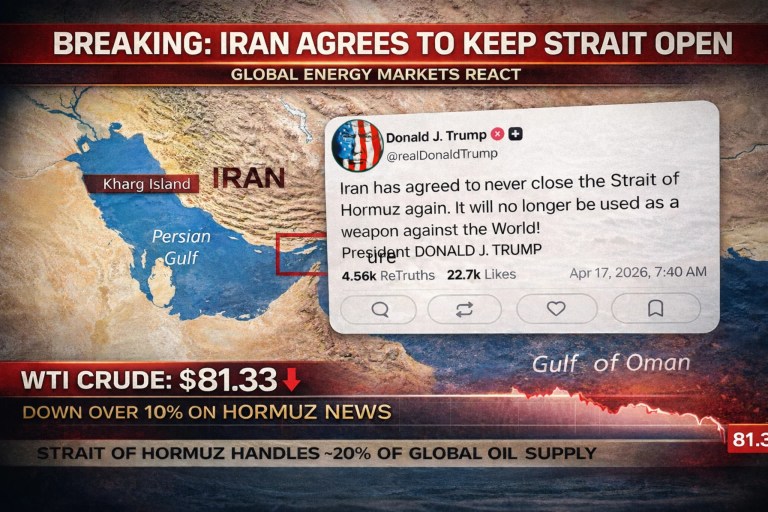
The involvement of U.S. bases in the retaliatory phase further elevates the risk of sustained conflict. Energy markets reacted immediately, with oil futures spiking in early trading. Defense officials are closely monitoring maritime traffic in the Persian Gulf amid concerns about potential disruption.
What Comes Next
Several key questions now dominate the geopolitical landscape:
- Will additional waves of retaliation follow?
- Will regional actors join the confrontation?
- Can diplomatic backchannels contain the escalation?
Military analysts caution that the next 24 to 72 hours will be critical. If hostilities pause, diplomatic pressure could intensify. If strikes continue, the region could move toward sustained conflict.
At this stage, officials from all sides are signaling readiness while also publicly framing their actions as defensive.
The world is watching closely.
“Jersey Joe”
Jersey Joe is the host of The Reaver of Common Sense on the SHR Media network. The opinions expressed in this article are his own and reflect a commitment to logic, reason, and cutting through the political noise.
Support Independent Media – Keep Liberty Alive
Enjoyed this article? At SHR Media we are fully independent and refuse to hide truth behind a paywall. Every piece of our journalism is built for you and by you. If you believe in honest reporting, free speech, and holding those in power accountable, your support matters. Even the smallest contribution helps us fight censorship and shine a light on the stories the mainstream media ignores.
About the Author

Discover more from SHR Media
Subscribe to get the latest posts sent to your email.