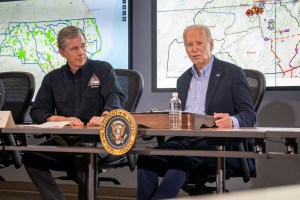
President Biden in North Carolina for Helene
Last week’s devastating Hurricane Helene left victims still struggling to receive federal aid. Despite a high-profile visit by the President and Vice President, victims have taken to social media to plead for the help they desperately need. Compounding their frustration, the DHS Secretary’s comments about the FEMA budget have sparked outrage over funding for criminal aliens and foreign aid. Furthermore, private citizens trying to assist victims on their own are being threatened with arrest if they refuse to stand down.
$750.00 for victims?
During her press conference yesterday, Vice President Harris announced that eligible victims will receive $750.00 in federal aid – $50.00 more than the amount provided to victims of the recent Maui wildfires. This increase in aid sparked significant backlash and criticism on social media.
The administration has recently sent an additional $2.4 billion in foreign aid to Ukraine,bringing the total aid to approximately $174 billion since the start of the Russian invasion in March 2022. As noted in previous posts, many are outraged by this continued funding, which covers not only military equipment but also supports Ukraine’s public services and retirement benefits for its citizens.
It’s not just Ukraine
Many Americans are outraged by the substantial government funding and assistance being provided to the influx of undocumented immigrants and asylum seekers who have recently entered the United States, particularly along the southern border. In New York, migrant families of four are receiving an average of $1,000 per month in addition to housing and other aid. Since President Biden took office, approximately 7.6 million unauthorized immigrants and asylum seekers have entered the country, and this is projected to cost American taxpayers an estimated $150.7 billion in 2024, or $887 per taxpayer. This means the average U.S. taxpayer will pay more to support these immigrants than the aid provided to victims of natural disasters like Hurricane Helene as of now.
“In terms of money, We have no money”
With recovery efforts for Hurricane Helene still in the early stages and another potential hurricane brewing in the Atlantic, Department of Homeland Security Secretary Alejandro Mayorkas expressed concern this past Wednesday about dangerously low funding levels for FEMA. “We are meeting immediate needs with the money we have, but we are expecting another hurricane,” Mayorkas warned. “FEMA does not have sufficient funds to make it through the hurricane season.” These statements further fueled public anger over how the federal government has allocated taxpayer dollars.
“No good deed goes unpunished”
In the wake of the disaster in North Carolina and East Tennessee, a heartening development has been the response of private citizens across the U.S. They have used their own aircraft to conduct helicopter rescues and deliver essential supplies like food and Starlink internet to victims. Regrettably, the government has warned some of these Good Samaritans to cease their humanitarian efforts, threatening criminal prosecution if they continue. The authorities have also prohibited citizens from using drones to transport food and water, and have imposed flight restrictions over the affected area.
Elon Musk, founder and CEO of SpaceX/Starlink, has announced that all Starlink systems in the affected areas will be activated for free and remain operational for the next 30 days. This will provide internet and communication services not only to victims of Hurricane Helene, but also to first responders, enabling them to stay connected during the crisis.
The death toll rises from Helene
The aftermath of Hurricane Helene has been devastating. So far, 200 people have perished, with over half of the casualties occurring during the severe flooding in Eastern Tennessee and North Carolina. Hundreds remain missing, and the chances of survival are dwindling, leading rescue efforts to shift from life-saving to recovery operations. This has raised questions about the seemingly slow initial response from FEMA to the affected region. The flooding’s devastation and the destruction of critical infrastructure were well known early on, yet the emergency declarations were not put into action quickly enough. Additionally, the state and federal resources in North Carolina appeared lethargic in their response, while people continue to suffer from the catastrophic effects of the storm.
What are your thoughts about the entire Helene situation? From funding, to response, let us know in the comments below.
About the Author

Discover more from SHR Media
Subscribe to get the latest posts sent to your email.