
Rep. Adam Schiff
In a concerning turn of events, the assault on free speech appears to be intensifying across the political landscape. On the heels of California Governor Gavin Newsom signing the controversial “anti-meme” bill, which grants the state broad powers to regulate and potentially censor online content, prominent Democratic figures have doubled down on calls to curtail fundamental First Amendment rights. Former Secretary of State Hillary Clinton has openly advocated for “punishment” of individuals engaging in “free speech” online, a chilling proposition that threatens to erode the bedrock principles of a free and open internet. Adding to the chorus, climate envoy John Kerry has gone so far as to claim the First Amendment “gets in the way” of the government’s agenda, a brazenly authoritarian stance that should alarm all who value the right to free expression. And Representative Alexandria Ocasio-Cortez has joined the fray, demanding limitations on online speech, raising the specter of a future where the government dictates acceptable discourse. Now, in what appears to be a coordinated effort to further tighten the noose around free speech, Congressman Adam Schiff, a prominent Democrat, is poised to unveil his own proposals, likely building upon the disturbing precedents set by his ideological allies.
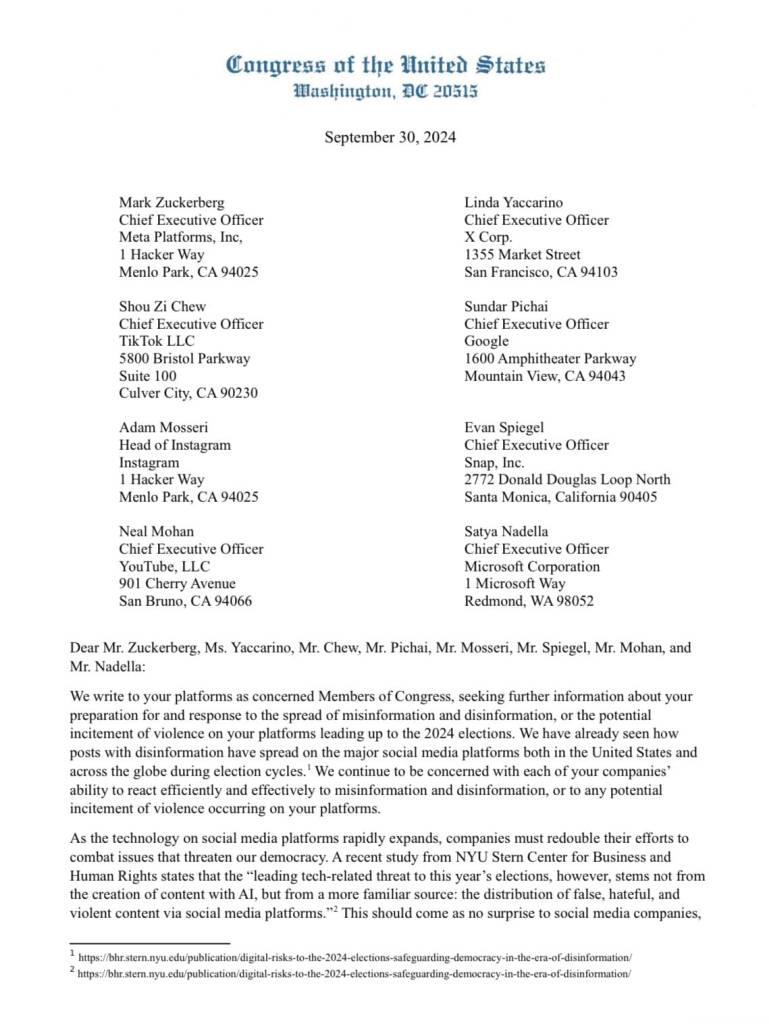
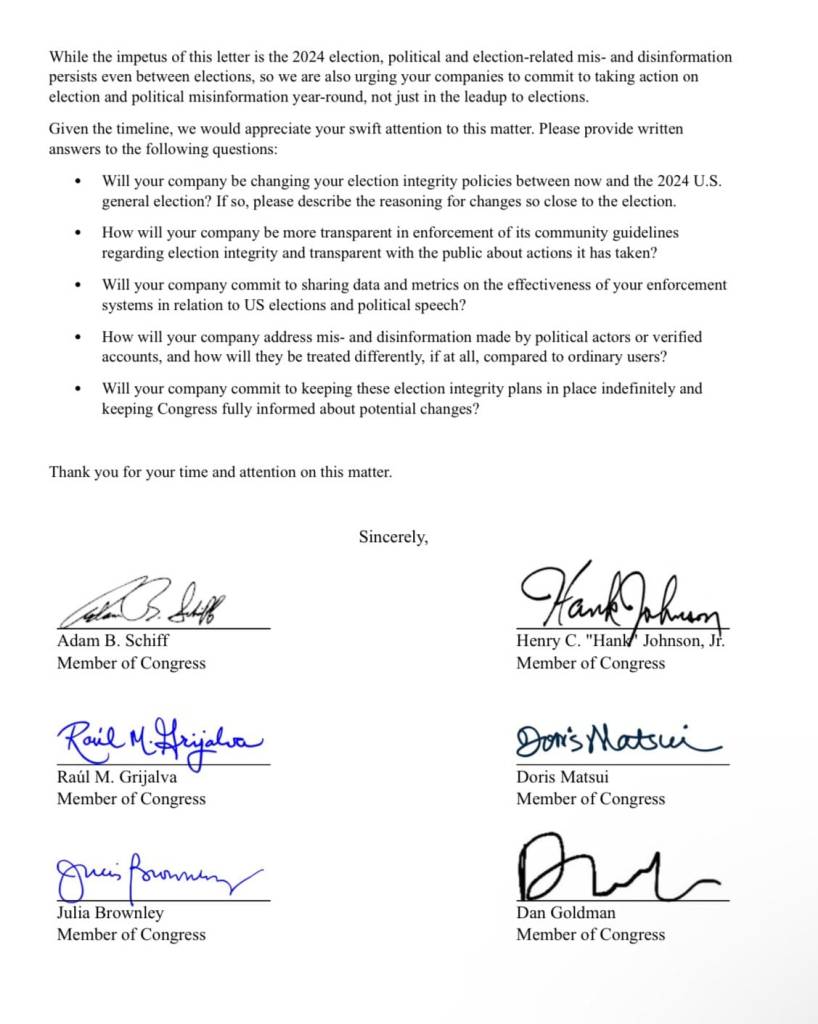
On September 30th, 2024, Congressman Adam Schiff, a prominent figure in the political landscape, quietly but firmly sent an official letter from his congressional office to the leadership of all the major social media companies operating in the United States. In this letter, Schiff expressed grave concerns over the troubling spread of misinformation and disinformation across their online platforms, as well as the potential for this harmful content to incite violence in the lead-up to the pivotal 2024 national elections.
The growing pressure on tech companies from a prominent member of Congress, who may soon become the next Senator from California, is not a wholly unprecedented situation. However, it does shine a spotlight on a renewed push among certain Democratic lawmakers to impose greater restrictions on free speech on major social media platforms. This renewed effort to curb online discourse raises important questions about the legality and constitutionality of such actions under the First Amendment protections for freedom of expression. After all, who gets to decide what constitutes “misinformation” or “disinformation” worthy of censorship or removal? Is it elected officials, appointed bureaucrats, or the tech companies themselves making these subjective determinations? There are valid concerns that this could lead down a slippery slope of government overreach and the stifling of legitimate debate on important issues. Proponents argue that some regulation is necessary to combat the spread of genuinely harmful falsehoods, but critics counter that the risks of infringing on fundamental liberties outweigh those benefits. Ultimately, this clash between lawmakers’ desire for control and the public’s right to free speech highlights the complex, evolving nature of navigating free expression in the digital age. It’s a debate that is far from settled and will likely continue to be a source of intense political and legal wrangling in the years to come
“As the technology on social media platforms rapidly expands, companies must redouble their efforts to combat issues that threaten our democracy” – Rep. Adam Schiff (D) – California
The federal government’s involvement in throttling certain groups and topics on social media platforms has become a growing concern in recent history. The release of the “Twitter Files” has shed significant light on this issue, revealing the extent to which government agencies have pressured and collaborated with tech companies to limit the spread of specific narratives and restrict certain types of speech online. This troubling trend has been further underscored by Meta CEO Mark Zuckerberg’s own admission that his company faced similar demands to curb certain forms of expression on their platforms.
The government’s efforts to dictate and control the flow of information on social media are not new, but have rather been an ongoing and insidious process. A letter written by Representative Adam Schiff in July 2019 exemplifies this, as he penned a request to then-Twitter Director of Public Policy Carlos Monje Jr., essentially asking the company to take action against accounts and content that the government deemed undesirable. Monje’s response, acknowledging the pressure to limit speech, lays bare the uncomfortable reality that tech giants have often succumbed to such demands, compromising their stated commitments to free expression in the process.
This dynamic represents a deeply troubling encroachment on fundamental civil liberties, as the federal government seeks to wield its influence to shape the online discourse and restrict the free flow of ideas. As the “Twitter Files” and Zuckerberg’s revelations have shown, this is not an isolated incident, but rather a concerted effort to control the narrative and stifle dissenting voices. The implications for the future of a truly open and democratic digital landscape are profoundly concerning, and underscore the urgent need for greater transparency, accountability, and protection of free speech rights in the digital age.
The debate surrounding the scope and limits of free speech in the digital age has been a contentious and divisive issue, with arguments emerging from both sides of the political spectrum. At the heart of the matter is the question of how the fundamental principles of the First Amendment apply to the modern landscape of social media platforms, which many have likened to the “new town square” of our era. Proponents of unfettered online expression argue that unless a user has clearly violated a specific law, such as inciting violence or making credible threats, there should be no grounds for any action to be taken against them for merely posting their opinions and views, no matter how controversial or unpalatable they may be to others.
In contrast, those on the other side of the aisle have long contended that the prevalence of “misinformation” and “disinformation” online poses such a grave threat to the public good that it justifies certain restrictions or limitations on speech, even if it falls short of outright illegality. This view has gained particular traction among Democratic lawmakers and policymakers, who have pushed for greater regulation and content moderation on social media platforms. The recent high-profile arrests in the United Kingdom of individuals for expressing support for protest movements has further inflamed this debate, with many expressing shock and outrage that citizens of a supposedly “free” society could face prosecution merely for voicing their opinions. As the battle over the boundaries of free speech in the digital age rages on, the fundamental tension between individual liberty and collective wellbeing remains at the heart of this complex and divisive issue.
What do you think, should social media sites be restrictive to what speech is allowed? Is this a slippery slope? Please comment below.
About the Author

Discover more from SHR Media
Subscribe to get the latest posts sent to your email.