
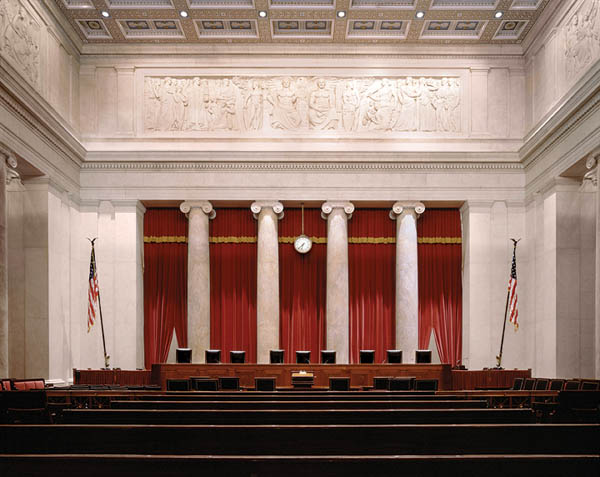
The Supreme Court of the United States is shown illuminated at night in Washington, D.C. The Court serves as the highest judicial authority in the federal government.
Structure, Authority, and Constitutional Role
By SHR Media Staff
Updated: January 10, 2026
Executive Overview
The Supreme Court of the United States is the highest judicial authority in the federal government. It serves as the final interpreter of the Constitution and federal law. The Court resolves disputes between states, reviews the constitutionality of laws and executive actions, and ensures uniform interpretation of federal law across the nation.
The Supreme Court does not create laws. It does not enforce laws. Its authority comes solely from the Constitution and from acts of Congress passed under constitutional authority. The Court’s power rests on judgment, not force, and its legitimacy depends on public confidence in its adherence to the Constitution.
Table of contents
- Structure, Authority, and Constitutional Role
- Executive Overview
- Government Before the Constitution
- Creation of the Supreme Court
- Judicial Power Defined
- Separation of Powers
- The Federalist Perspective
- Establishing the Court’s Structure
- Appointment and Confirmation
- Judicial Review
- Stare Decisis
- Landmark Decisions
- Limits on Supreme Court Power
- The Modern Supreme Court
- Why the Supreme Court Matters
- Source Index
- Update Log
Government Before the Constitution
Before the adoption of the United States Constitution, the nation operated under the Articles of Confederation. The Articles created a loose alliance of states with a weak central government. There was no national executive branch and no national judiciary.
Under the Articles, disputes between states had no permanent court to resolve them. Congress could appoint temporary panels, but these lacked authority and consistency. There was no mechanism to ensure uniform interpretation of national laws or treaties.
This absence of a national judicial system became a major weakness. States often ignored congressional resolutions. Conflicts between states went unresolved. Foreign treaties were inconsistently applied. These failures directly influenced the decision to create a stronger federal judiciary during the Constitutional Convention.
Creation of the Supreme Court
Article III of the Constitution establishes the judicial branch. It states that judicial power shall be vested in one Supreme Court and in such inferior courts as Congress may establish.
The Constitution deliberately provides limited detail about the structure of the Court. It does not specify the number of justices. It does not define internal procedures. These choices were intentional. The Founders wanted flexibility while anchoring judicial authority firmly within the Constitution.
Judges hold office during good behavior, which has been interpreted as life tenure unless removed through impeachment. This protection was designed to insulate judges from political pressure and allow decisions based on law rather than public opinion.
Judicial Power Defined
The Constitution grants the Supreme Court authority over cases arising under the Constitution, federal laws, treaties, disputes involving ambassadors, admiralty cases, and controversies between states or between citizens of different states.
The Court has original jurisdiction in a narrow set of cases, such as disputes between states. Most cases reach the Court through appellate review from lower federal courts or state supreme courts.
Congress has the power to regulate the Court’s appellate jurisdiction within constitutional limits. This structure creates an ongoing balance between legislative authority and judicial independence.
Separation of Powers
The Supreme Court exists as one of three coequal branches of government. The separation of powers divides authority among the legislative, executive, and judicial branches to prevent concentration of power.
The Court interprets laws passed by Congress but cannot enact legislation. It reviews executive actions but cannot enforce its own rulings. Enforcement depends on the executive branch. Funding depends on Congress.
This structure reflects the Founders’ belief that liberty is best preserved when power is divided and checked. The judiciary was designed to be the weakest branch in terms of force, relying instead on reason and legitimacy.
The Federalist Perspective
Alexander Hamilton addressed the role of the judiciary in Federalist No. 78. He described the judiciary as having neither the power of the sword nor the purse. Its strength lies in judgment alone.
Hamilton argued that lifetime tenure was essential to protect judicial independence. Without it, judges would be subject to political retaliation for unpopular decisions. This reasoning remains central to understanding the Court’s role.
Federalist No. 51 further explains how separation of powers protects liberty by forcing each branch to defend its own authority against encroachment by the others.
Establishing the Court’s Structure
The Judiciary Act of 1789 established the federal court system and set the original size of the Supreme Court at six justices. Congress later changed the number several times, increasing and decreasing it based on administrative needs and political considerations.
The number of justices has ranged from five to ten at various points in history. In 1869, Congress set the number at nine, where it has remained ever since.
The Constitution allows Congress to change the number of justices, but such changes have been rare and controversial. The stability of nine justices has contributed to institutional continuity.
Appointment and Confirmation
Supreme Court justices are nominated by the President and confirmed by the Senate. This process reflects shared responsibility between the executive and legislative branches.
The Constitution does not specify confirmation procedures. Over time, the Senate developed its own rules, including hearings before the Judiciary Committee. Early confirmations were often quick and quiet. Modern confirmations are more extensive and public.
Once confirmed, a justice serves for life unless they resign, retire, or are removed through impeachment.
Judicial Review
The Constitution does not explicitly mention judicial review. The power emerged through practice and precedent.
In Marbury v. Madison in 1803, the Supreme Court held that it had the authority to declare acts of Congress unconstitutional. Chief Justice John Marshall reasoned that the Constitution is the supreme law of the land and that courts must apply it when conflicts arise.
Judicial review allows the Court to invalidate laws or actions that violate the Constitution. This power has become central to the Court’s role.
Stare Decisis
Stare decisis is the principle that courts should follow precedent. It promotes stability and predictability in the law.
The Supreme Court is not absolutely bound by precedent. It has overturned prior decisions when it determined that earlier rulings were incorrect or inconsistent with constitutional principles. Such reversals are rare and often occur after long periods of debate.
Landmark Decisions
Throughout its history, the Supreme Court has issued decisions that shaped the nation’s legal framework.
In McCulloch v. Maryland, the Court affirmed federal supremacy and implied powers. In Gibbons v. Ogden, it clarified Congress’s authority over interstate commerce.
In Brown v. Board of Education, the Court held that racial segregation in public schools violated the Constitution. In Miranda v. Arizona, it established protections for suspects during police interrogation.
Each decision arose from specific facts and legal questions. Together, they illustrate the Court’s evolving interpretation of constitutional principles.
Limits on Supreme Court Power
The Supreme Court cannot initiate cases. It must wait for disputes to be brought before it. It cannot enforce its own rulings. Compliance depends on other branches and on public acceptance.
Congress can amend the Constitution to override Court decisions. Congress also controls the Court’s budget and jurisdiction within constitutional limits.
These constraints reinforce the Court’s role as an interpreter rather than a ruler.
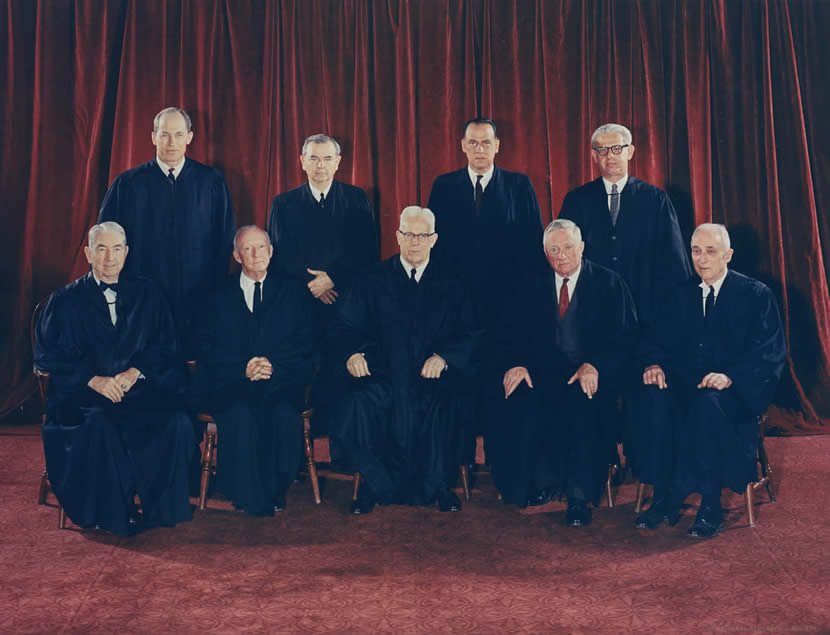
The Modern Supreme Court
Today, the Supreme Court receives thousands of petitions each year but hears only a small fraction. Most cases are accepted through the certiorari process, which allows the Court to select cases of national importance or those involving conflicting lower court rulings.
Oral arguments are limited. Decisions are issued in written opinions that explain the Court’s reasoning. Justices may write concurring or dissenting opinions to express differing views.
Why the Supreme Court Matters
The Supreme Court provides consistency in constitutional interpretation. It resolves disputes between branches of government and between states. It ensures that laws align with constitutional limits.
Its authority depends on adherence to the Constitution and respect for precedent. The Court’s legitimacy rests on public trust in its independence and impartiality.

Most cases do not begin in the Supreme Court. Instead, they reach the Court on appeal from lower federal circuit courts or state supreme courts. A party must file a Petition for a Writ of Certiorari. Under the “Rule of Four,” at least four of the nine Justices must vote to accept the case. Out of roughly 7,000–8,000 petitions filed annually, the Court typically hears only 60–80.
Original Jurisdiction: These are rare cases that start directly at the Supreme Court (e.g., disputes between two states over water rights or boundaries).
Appellate Jurisdiction: This is the Court’s primary role—reviewing decisions from lower courts to ensure they align with federal law and the Constitution.
Chief Justice: John G. Roberts, Jr.
Associate Justices: Clarence Thomas, Samuel A. Alito, Jr., Sonia Sotomayor, Elena Kagan, Neil M. Gorsuch, Brett M. Kavanaugh, Amy Coney Barrett, and Ketanji Brown Jackson.
The “Shadow Docket” (or emergency docket) refers to orders and summary decisions the Court issues outside of its main “merits docket.” Unlike standard cases, these often do not involve oral arguments or full written opinions. In recent years, the Court has used this docket more frequently to rule on emergency stay requests regarding immigration, federal regulations, and state laws.
There are only two ways to overturn a Supreme Court constitutional interpretation:
A Subsequent Decision: The Court itself can overrule a past precedent in a later case (e.g., Dobbs v. Jackson overturning Roe v. Wade).
Constitutional Amendment: Congress and the States can pass an amendment to the Constitution that effectively nullifies a Court ruling.
No. Under the Separation of Powers, only Congress has the power to make laws. The Supreme Court’s power is limited to Judicial Review—interpreting the law and determining if it violates the Constitution. If the Court strikes down a law, it is not “legislating” but rather declaring that the law is null and void because it conflicts with the “Supreme Law of the Land.”
Source Index
United States Constitution
Articles of Confederation
Federalist Papers No. 51 and No. 78
Judiciary Act of 1789
Marbury v. Madison 1803
McCulloch v. Maryland 1819
Gibbons v. Ogden 1824
Brown v. Board of Education 1954
Miranda v. Arizona 1966
Supreme Court of the United States official historical archives
Library of Congress
National Archives and Records Administration
Update Log
Initial publication December 2025
Updated January 10, 2025
Future updates will be logged here with date and summary
About the Author

Discover more from SHR Media
Subscribe to get the latest posts sent to your email.