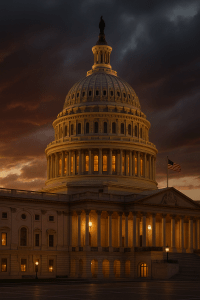
The U.S. Capitol where the constitutional power of impeachment begins
Updated: January 10, 2026
Introduction
Federal impeachment in the United States is one of the most powerful mechanisms built into the Constitution. It is widely misunderstood and frequently becomes politically volatile. It serves as Congress’s strongest constitutional tool for holding the executive and judicial branches accountable, while the public often sees impeachment through a modern political lens, its origins are far older. Its legal purpose and procedural design are also far more structurally significant.
This expanded educational article examines impeachment with greater depth. It covers the constitutional foundations, step by step procedures, and Senate trial rules. The article also explores Judiciary Committee processes and historical failed impeachments. It discusses the differences between impeachment and expulsion. Additionally, it looks at the role impeachment plays in America’s system of checks and balances.
Table of contents
- Introduction
- I. Constitutional Foundations of Federal Impeachment
- II. What Are High Crimes and Misdemeanors ?
- III. Who Can Be Impeached
- IV. The House Impeachment Process
- V. The Senate Impeachment Trial
- VI. Historical Overview of Presidential Impeachments
- VII. Historical Failed Impeachments
- VIII. Impeachment of Federal Judges
- IX. Impeachment of Cabinet Members and Other Officials
- X. Common Misconceptions About Impeachment
- XI. The Role of Politics in Impeachment
- XII. The Role of Public Opinion
- XIII. Impeachment and the Separation of Powers
- XIV. Limits on the Impeachment Power
- XV. Expulsion vs Impeachment
- XVI. How Impeachment Has Evolved
- XVII. Consequences of Impeachment and Conviction
- XVIII. Why Impeachment Matters
I. Constitutional Foundations of Federal Impeachment
The Constitution references impeachment in multiple sections. The most important appear in Articles I, II and III.
1. Article I: Congressional Authority
Article I grants Congress exclusive authority over all impeachment matters.
- The House of Representatives holds the sole power of impeachment.
- The Senate holds the sole power to try impeachments.
- When the President is tried, the Chief Justice presides.
- Conviction requires a vote of two thirds of Senators present.
2. Article II: Who Can Be Impeached and For What
Article II Section 4 states:
“The President, Vice President and all civil officers of the United States shall be removed from office upon impeachment. This applies if there is a conviction of treason, bribery, or other high crimes and misdemeanors.”
This phrase, borrowed from English parliamentary tradition, includes abuses of public trust even when not tied to statutory crimes.
3. Article III: Judicial Relationship to Impeachment
Those convicted remain subject to criminal prosecution. Impeachment does not shield or replace criminal liability.
II. What Are High Crimes and Misdemeanors?
High crimes and misdemeanors refers to abuses of power, violations of oath and breaches of the public trust. Congress may define the exact scope during each impeachment inquiry.
Examples include:
- Abuse of authority
- Corruption or bribery
- Obstruction
- Misuse of office
- Violations of constitutional duties
Criminal conduct may be impeachable, but not all impeachable conduct must be criminal.
III. Who Can Be Impeached
Impeachment applies to federal officials, including:
- The President
- The Vice President
- Cabinet secretaries
- Ambassadors
- Federal judges
- Heads of agencies and departments
Former officials may also be impeached if Congress asserts jurisdiction. It did so in the case of former Secretary of War William Belknap.
IV. The House Impeachment Process
House procedures vary, but several consistent steps are present.
1. Initiation of an Inquiry
An inquiry may begin through:
- A House resolution
- A committee vote
- A request from leadership
- Receipt of evidence from inspectors general or independent counsel
2. Committee Investigation
Committees may issue subpoenas, hold hearings, request documents and conduct depositions.
3. Judiciary Committee Procedures
The Judiciary Committee usually leads the impeachment process. Its procedures include:
Authorization
The Committee receives authority from a House vote, referral or internal approval.
Evidence Gathering
The Committee collects materials from:
- Subpoenaed witnesses
- Executive agencies
- Inspectors General
- Intelligence briefings
- Depositions and written statements
Hearings
Hearings may involve:
- Constitutional scholars
- Legal experts
- Officials with firsthand knowledge
- Committee counsel presentations
Majority and minority counsel participate equally in questioning.
Drafting Articles
Committee staff drafts articles based on the record. Members debate the wording in a markup session where amendments may be proposed.
Committee Vote
Each article is voted on individually. Approved articles proceed to the full House.
4. House Debate and Vote
The full House debates and votes on each article. A simple majority vote impeaches the official. Impeachment is comparable to an indictment.
V. The Senate Impeachment Trial
The Senate has exclusive authority to conduct impeachment trials. These trials follow specialized procedures outlined in Senate rules.
Expanded Section: Senate Trial Rules
1. Oath and Formal Organization
Before the trial begins, all Senators take a special oath to do impartial justice. The Senate then formally organizes itself into a court of impeachment.
2. Presiding Officer
- If the President is tried, the Chief Justice presides.
- For all other officials, the President of the Senate or a designated Senator presides.
Presiding officers issue preliminary rulings, but any Senator may request a vote to overturn those rulings.
3. Evidence Standards
The Senate is not restricted by the Federal Rules of Evidence. It may:
- Admit hearsay
- Allow written testimony
- Reject witness requests
- Define relevance without judicial constraints
4. Witness Procedures
Witnesses may be approved or denied by majority vote. Testimony may be:
- Live
- Video recorded
- Written
Senators do not directly question witnesses. They submit written questions read aloud by the presiding officer.
5. Motions
The Senate may vote on:
- Motions to dismiss
- Motions to table articles
- Motions to admit or exclude evidence
- Motions to limit debate
6. Deliberations
Deliberations occur privately. Final votes occur publicly.
7. Voting Requirements
Conviction on any article requires a two thirds vote of Senators present. After conviction, the Senate may vote separately to disqualify the individual from future federal office.
VI. Historical Overview of Presidential Impeachments
1. Andrew Johnson (1868)
Impeached for violating the Tenure of Office Act. Acquitted in the Senate by one vote.
2. Bill Clinton (1998)
Impeached for perjury and obstruction. Acquitted in the Senate.
3. Donald Trump (2019 and 2021)
First impeachment involved Ukraine related allegations.
Second impeachment involved charges related to the January 6 Capitol breach.
Acquitted both times.
No President has ever been removed through impeachment.
VII. Historical Failed Impeachments
Several major impeachment efforts failed at various stages. These failures shaped the boundaries of federal impeachment power.
1. Justice Samuel Chase (1805)
Acquitted. This cemented judicial independence.
2. President John Tyler (1842)
Impeachment inquiries initiated but no articles approved.
3. President Andrew Johnson (1868)
Failed to convict by a single vote.
4. Treasury Secretary Andrew Mellon (1932)
Inquiry ended after Mellon resigned.
5. Justice William O. Douglas (1970)
Judiciary Committee rejected impeachment for lack of evidence.
6. President Richard Nixon (1974)
Articles approved by Judiciary Committee, but he resigned before a full House vote.
7. Numerous Judicial Cases
Several judges faced inquiries that collapsed due to insufficient proof or political opposition.
VIII. Impeachment of Federal Judges
Federal judges face impeachment for:
- Bribery
- Perjury
- Corruption
- Abuse of authority
- Misconduct
- Incapacity
Fifteen judges have been impeached. Eight were removed.
IX. Impeachment of Cabinet Members and Other Officials
Cabinet members can be impeached. Belknap’s case in 1876 established that resigning does not remove jurisdiction.
X. Common Misconceptions About Impeachment
- Impeachment is not removal.
- It is not a criminal process.
- A statutory crime is not required.
- Courts do not overturn impeachment outcomes.
- Impeachment does not reverse elections.
XI. The Role of Politics in Impeachment
While the Constitution defines impeachment as a duty, political forces shape how and when Congress uses the power.
Factors include:
- Partisan control
- Public opinion
- Legislative agendas
- Electoral timing
Political motivations have influenced every major impeachment.
XII. The Role of Public Opinion
Public perception affects the pace and direction of impeachment. Low public support often reduces appetite for conviction.
XIII. Impeachment and the Separation of Powers
Impeachment acts as a key structural safeguard:
- Congress checks executive power.
- Congress checks judicial misconduct.
- The President cannot pardon impeachment cases.
- Courts cannot override Senate convictions.
This protects the constitutional balance.
XIV. Limits on the Impeachment Power
Legal, political and practical limits exist:
- Only civil officers can be impeached.
- Conviction requires two thirds of the Senate.
- Public opinion influences congressional decision making.
- The process consumes significant time and resources.
XV. Expulsion vs Impeachment
Impeachment and expulsion are different mechanisms.
Impeachment
- Applies to federal officials, not members of Congress.
- Conducted by House and Senate.
- Conviction removes the individual and may bar them from future office.
- Grounds include treason, bribery and high crimes and misdemeanors.
Expulsion
- Applies only to Senators and Representatives.
- Each chamber expels its own members.
- Requires a two thirds vote.
- Grounds include misconduct or violations of ethical standards.
- Does not bar future office unless separate legal processes apply.
Impeachment cannot remove members of Congress. Only expulsion can.
XVI. How Impeachment Has Evolved
Impeachment has shifted through eras:
- Early republic use was rare.
- Reconstruction became the first major political test.
- Twentieth century focused mainly on judicial misconduct.
- Modern impeachments reflect national polarization and media pressure.
XVII. Consequences of Impeachment and Conviction
Consequences include:
- Removal from office
- Potential disqualification
- Continued eligibility for criminal prosecution
- Permanent impact on historical reputation
XVIII. Why Impeachment Matters
Impeachment is a constitutional safeguard that:
- Limits abuses of power
- Protects the public trust
- Reinforces accountability
- Preserves balance between branches
- Upholds democratic principles
It remains one of the most significant tools available to Congress.
Sources
United States Constitution
Article I, Article II, Article III. Full constitutional text available through the National Archives.
Senate Rules of Impeachment Trials
Rules of Procedure and Practice in the Senate When Sitting on Impeachment Trials, published by the United States Senate.
House Judiciary Committee Historical Impeachment Materials
U.S. House of Representatives History, Art and Archives collection documenting impeachment proceedings and institutional practices.
Congressional Research Service
Impeachment and Removal, an official CRS brief detailing constitutional and procedural standards.
Federal Judicial Center
Biographical Directory of Federal Judges and historical impeachment data involving the federal judiciary.
Library of Congress
Impeachment. A curated research guide outlining statutory authority, historical examples, and congressional procedures.
National Archives
Impeachment related historical records including presidential impeachment files and constitutional documentation.
Senate Historical Office
Historical overviews of presidential impeachment trials and explanations of Senate procedures.
House Practice Manual
Procedural guidelines for impeachment inquiries, committee authority and drafting of articles.
Presidential Impeachment Records
Documented impeachment proceedings involving Andrew Johnson, Bill Clinton and Donald Trump as maintained by the Senate Historical Office.
Yes. While the Constitution does not explicitly state that former officials can be impeached, historical precedent exists. In 1876, the House impeached Secretary of War William Belknap after he resigned. More recently, the 2021 impeachment trial of Donald Trump took place after his term ended, with the Senate voting that it had constitutional jurisdiction to try a former president.
Not necessarily. “High Crimes and Misdemeanors” is a term of art from English Law referring to “political” offenses—acts against the state or breaches of the public trust. An official can be impeached for conduct that is not a statutory crime (such as gross negligence or abuse of power) and, conversely, may not be impeached for a minor criminal offense that does not impact their fitness for office.
No. In Nixon v. United States (1993), the Supreme Court ruled that because the Constitution gives the Senate the “sole” power to try impeachments, the process is a “political question” and not subject to judicial review. The Senate is the final judge of its own procedures and outcomes.
The Constitution only specifies that the Chief Justice presides when the President is tried. For all other officials, including the Vice President, the presiding officer is typically the President Pro Tempore of the Senate. If the Vice President were on trial, they would be disqualified from presiding over their own case.
No. Impeachment is a remedial process, not a punitive criminal one. Its only outcomes are removal from office and potential disqualification from future office. However, Article I, Section 3, Clause 7 notes that a convicted individual remains “liable and subject to Indictment, Trial, Judgment and Punishment, according to Law” in a standard court of law.
About the Author

Discover more from SHR Media
Subscribe to get the latest posts sent to your email.