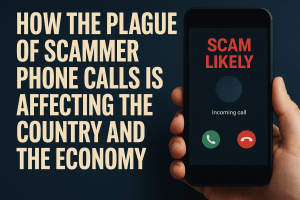
Scam phone calls have become a nationwide threat, draining billions and damaging trust in communication systems.
Written by The Phantom
Over the past decade, scam phone calls have grown from a nuisance into a national crisis that hits millions of Americans every day. What started as simple robocalls has turned into an organized criminal industry driven by cheap technology, data breaches, and global fraud networks. These operations now pose a direct threat to personal finances, national trust, and economic productivity.
Massive Financial Losses
Phone-based scams cost Americans billions each year. Criminals use spoofed numbers, AI-generated voices, and psychological pressure to impersonate government officials, banks, or even family members. Victims are pushed into sending money through hard to trace methods like prepaid gift cards, wire services, or cryptocurrency. Seniors, immigrants, and vulnerable households are especially at risk. Beyond the financial damage, many victims struggle with emotional distress and long-term insecurity.
Growing Distrust in Phone Communication
The explosion of scam calls has severely eroded trust in the phone system itself. Many people refuse to answer calls from unfamiliar numbers, which means legitimate calls from hospitals, schools, employers, and government offices often go unanswered. Important communications are delayed, missed, or ignored entirely. This breakdown reduces the efficiency of essential services and disrupts daily life.
Higher Costs for Businesses
Businesses and service providers pay a heavy price as well. Companies must invest in fraud prevention tools, call authentication systems, employee training, and cybersecurity protections. Phone carriers spend heavily implementing verification protocols like STIR/SHAKEN. These costs often get passed on to consumers. Meanwhile, employees waste significant time filtering suspicious calls or responding to scam attempts posing as internal communications, creating a hidden drain on productivity.
How Some Are Fighting Back
While the problem is massive, some are pushing back. Law enforcement agencies, telecom regulators, and tech companies are working to identify scam call centers and shut down illegal operations. At the same time, independent creators are stepping in to expose how these schemes work. One of the best known is YouTuber “Scammer Payback,” who calls into scam centers, records the interactions, and shows the public exactly how these criminals operate. By wasting scammers’ time, educating viewers, and helping some victims recover access to their devices, channels like his make it harder for fraudsters to work in the shadows and raise public awareness about common tactics.
Wider Economic Impact
At a national level, the constant barrage of scam calls weakens public confidence in digital and financial systems. When people encounter fraud regularly, they become more hesitant with spending, online transactions, and financial communication. This hesitancy affects industries that rely on secure and trusted interactions, including banking, healthcare, insurance, and e-commerce. As the economy becomes more interconnected and digital, widespread mistrust can slow growth, stall innovation, and damage institutional credibility.
Scam calls are no longer just an annoyance. They are a growing economic threat with consequences that ripple far beyond the phone line.
This op-ed was written by The Phantom for SHR Media.
You can read more of my work.
Follow me on X for real-time commentary and updates at SHRMedia
About the Author

Discover more from SHR Media
Subscribe to get the latest posts sent to your email.