
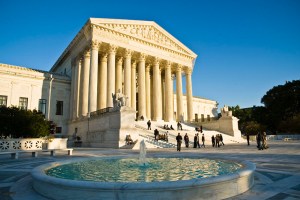
Official public domain image of the U S Supreme Court exterior.
November 10, 2025
The United States Supreme Court on Monday declined to take up a case that sought to overturn its 2015 landmark ruling recognizing same-sex marriage nationwide. In an unsigned order, the Court denied review in Davis v. Ermold, leaving the existing precedent intact and signaling little interest in reopening the issue.
The Case Behind the Petition
The petition came from Kim Davis, the former Kentucky county clerk who became nationally known in 2015 after refusing to issue marriage licenses to same-sex couples following the Court’s decision in Obergefell v. Hodges.
Davis argued that her refusal was protected under the First Amendment and that she should not be held personally liable for damages awarded to two same-sex couples she denied licenses.
Lower courts rejected her claims. The U S Court of Appeals for the Sixth Circuit ruled that because Davis was acting as a government official, she was required to follow the law and could not claim a personal religious exemption while performing her public duties.
Her appeal to the Supreme Court asked the justices to revisit both her liability and the underlying recognition of same-sex marriage rights.
Obergefell and the Court’s Modern History on Same-Sex Marriage
The Supreme Court’s 2015 Obergefell decision held that the Fourteenth Amendment guarantees same-sex couples the right to marry. The ruling required all states to issue marriage licenses and recognize marriages performed elsewhere.
The decision followed a decade of litigation in federal and state courts that rapidly expanded marriage rights for same-sex couples.
By the time Obergefell reached the Court, more than two thirds of states already permitted same-sex marriage through legislation or court rulings.
In the years since, the Court has not directly revisited the issue. Although individual justices have expressed concerns about the reasoning behind Obergefell, no majority has formed around overturning or narrowing the ruling.
Why Legal Observers Expected This Outcome
Legal analysts widely expected the Court to decline Davis v. Ermold for several reasons:
• The case did not present a new constitutional question.
• Davis’ personal liability claim had already been litigated extensively in lower courts.
• Overturning or modifying Obergefell would affect hundreds of thousands of existing marriages, creating significant legal disruption.
• The petition did not provide a clean vehicle for reconsidering the broader same-sex marriage issue.
For these reasons, court watchers viewed the petition as unlikely to succeed.
The Court’s Decision
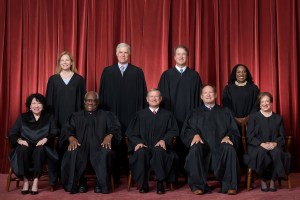
The Supreme Court’s refusal to hear the case leaves Obergefell in place and maintains the nationwide recognition of same-sex marriage. The Court offered no comment or explanation, which is typical for denials of review.
The order effectively ends Kim Davis’ attempts to challenge her legal liability and closes this chapter of litigation.
What Comes Next
The decision does not eliminate the possibility of future challenges to same-sex marriage rights, but it indicates that the current Court is not prepared to revisit the issue through this case. For same-sex couples and state governments, the ruling preserves the status quo.
This report was prepared by SHR Media Staff. Additional updates will be provided as new information becomes available. For more national coverage and breaking developments, visit SHR Media.
About the Author

Discover more from SHR Media
Subscribe to get the latest posts sent to your email.