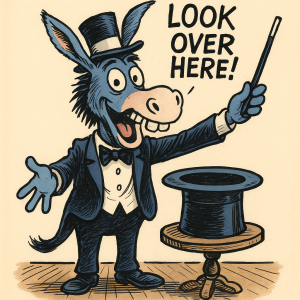
The Democratic Party’s magician act—drawing attention to the show, not the turnout.
The 2025 off-year election turnout gave Democrats plenty of headlines and talking points. But behind the banners and social media victory laps, the data tells a different story. The wins were real on paper—but they weren’t powered by enthusiasm. They were powered by absence.
Across New York City, New Jersey, Virginia, and California, turnout barely reached half of registered voters. In some cases, it didn’t even come close. The Democratic margins weren’t built on momentum; they were built on the apathy of everyone who stayed home.
The Numbers Behind the Narrative
Decision Desk HQ (DDHQ) vote totals compared to verified state registration data reveal the same pattern everywhere: low engagement and inflated victory optics.
| State or City | Race | Votes Cast | Registered Voters | Turnout |
|---|---|---|---|---|
| New York City | Mayor | 2,049,631 | ~5.1M | ~40% |
| New Jersey | Governor | 3,190,024 | 6.2M–6.4M | ~50–52% |
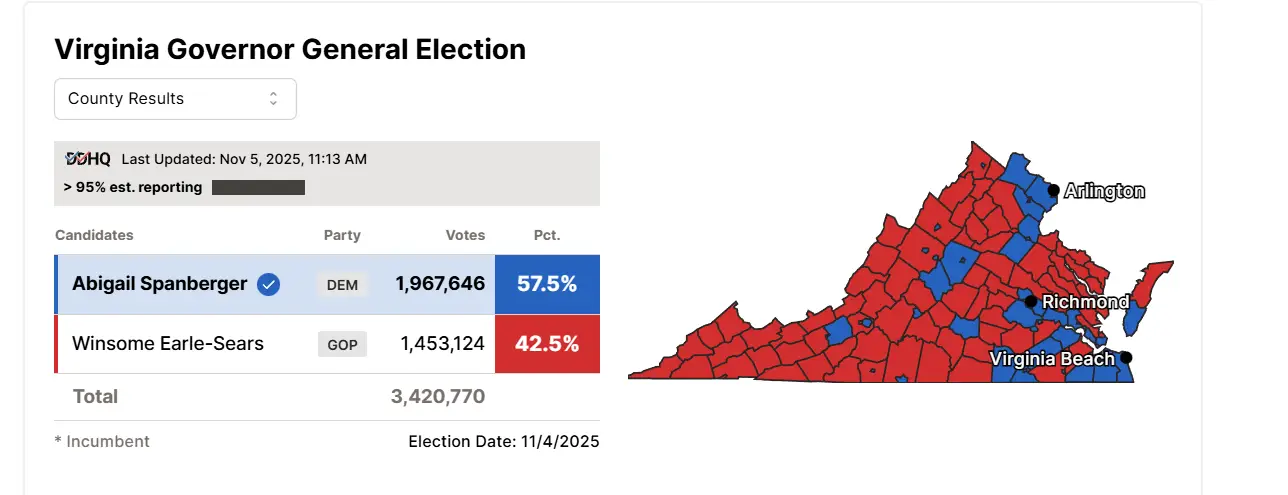
| Virginia | Governor | 3,420,770 | 6.3M | ~54% |
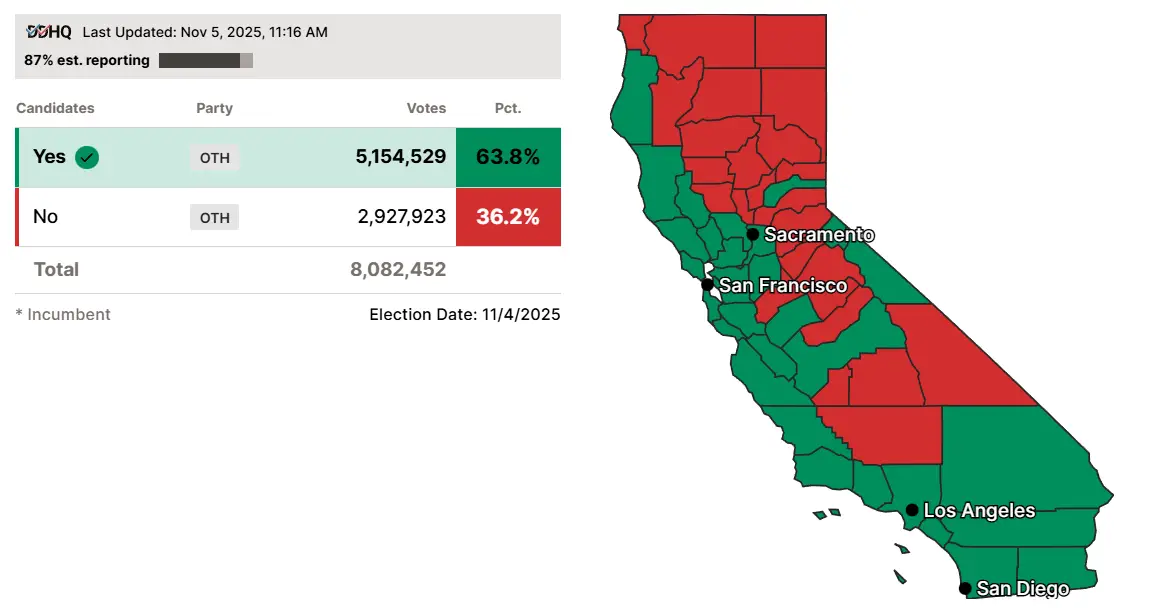
| California | Proposition 50 | 8,082,452 | 23.1M | ~35% |
Not one of these broke 60 percent turnout. That’s not a wave—it’s a warning sign.


New York City: The Apathy Capital
New York City’s mayoral turnout was about 40 percent. Out of more than five million registered voters, only 2,049,631 cast ballots.
Zohra Mamdani’s 1,036,051 votes represent roughly 20 percent of all registrants. Andrew Cuomo’s total came in around 17 percent. The remaining 60 percent didn’t bother.
Even if half of the city’s 1.1 million unaffiliated voters had turned out and leaned toward Cuomo, the outcome would have flipped. Instead, Mamdani’s base showed up while everyone else stayed home. That isn’t a city united around progressive politics—it’s a city on political autopilot.
Virginia and New Jersey: Participation Shrinks the Map
Virginia’s 54 percent turnout looks decent at first glance, until you remember it means nearly half the electorate sat out. Abigail Spanberger’s 1.9 million votes came from a pool of 6.3 million registered voters—less than one-third of the total.
In New Jersey, turnout hovered around 50 percent, depending on which registration baseline is used. Mikie Sherrill’s 1.79 million votes and Jack Ciattarelli’s 1.37 million look close, but together they represent only half the state’s electorate. That’s not a public mandate; that’s half the room empty.
California: The Silent Majority Stayed Silent
California’s Proposition 50 received 8,082,452 votes out of 23.1 million registered. That’s 35 percent turnout in the nation’s most populous state. When two-thirds of voters don’t participate, calling any outcome a “statement” is a stretch.
This pattern has repeated for years in California politics—big registration numbers, tiny participation. The party that controls the ballot language and the turnout operation wins by default, not persuasion.
The Illusion of Momentum
When every major race shows less than half of voters engaging, the idea of a “Democratic wave” collapses under its own math. These weren’t energized elections; they were unattended ones.
Candidates and pundits can claim victory all they want, but in political reality, winning with a fraction of the electorate isn’t dominance—it’s vacancy.
The data doesn’t say America moved left. It says America didn’t move at all.
The Real Takeaway
Voter disengagement is doing what no campaign strategy ever could: protecting incumbents and entrenching party control by default. When most of the country checks out, small, motivated groups can steer entire outcomes.
In 2025, Democrats didn’t expand their base—they simply inherited the void.
By Sack Head Shaun
Host of The Edge of Liberty on SHR Media
Follow on X: @2AgainstTyranny
Read more analysis and verified election coverage at SHRMedia.com.
About the Author

Discover more from SHR Media
Subscribe to get the latest posts sent to your email.