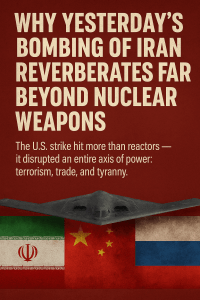
U.S. strike hits Iran’s nuclear sites and reverberates across China, Russia, and global terror networks
June 21, 2025 | By SHR Media
The U.S. strike hit more than reactors — it disrupted an entire axis of power: terrorism, trade, and tyranny.
On June 21, 2025, the United States launched a decisive airstrike against Iranian nuclear sites in Fordow, Natanz, and Esfahan using B-2 stealth bombers. But this mission was far more than a blow to Iran’s atomic ambitions — it cracked the backbone of a global authoritarian alliance built on terror, oil, and chaos.
1. Terrorism Network Disrupted
Iran has been designated a State Sponsor of Terrorism since 1984. Through its vast web of proxies — Hezbollah, Hamas, Shiite militias, and the Houthis — Iran has:
- Funded and orchestrated attacks that killed over 860 Americans, including the 1983 Beirut barracks bombing, and operations in Iraq and Jordan.
- Fueled bloody conflicts across Syria, Iraq, Yemen, and Gaza, leaving hundreds of thousands dead.
The precision strikes crippled Iran’s command-and-control, financial hubs, and strategic military nodes — cutting deep into terrorist coordination and capability.
2. China Loses Oil and Military Leverage
China buys up to 1.7 million barrels per day of Iranian crude — nearly 90% of Iran’s exports — providing Iran with lifeblood cash.
At the same time, Iran procures missile components and drone tech from China via black-market channels. With nuclear and industrial infrastructure damaged:
- Oil exports face new bottlenecks.
- Military exchanges are interrupted.
- China’s access to Iran’s energy and weapons partnerships is threatened — a double blow to Beijing.
3. Russia’s Drone Supply Disrupted — Ukraine Benefits
Iran has supplied Shahed-series drones to Russia for use against Ukraine. By the numbers:
- Over 8,000 Iranian-made drones have been launched by Russia.
- UK intelligence warns that instability in Iran could disrupt this key supply line.
Iran had even begun helping Russia build drones domestically, trading gold for drones and engaging in joint manufacturing. That pipeline now lies fractured.
4. North Korea’s Weapons Pipeline Shaken
Iran and North Korea have long cooperated on missile technology — from rocket motors to launch systems.
- Iran’s weakened military-industrial base threatens the arms exchange lifeline between Tehran and Pyongyang.
- This disruption places pressure on both nations’ strategic weapons development.
🚨 Final Takeaway
This wasn’t just a nuclear strike. It was a coordinated dismantling of:
- Iran’s nuclear program
- Iran’s terror networks
- China-Iran oil & arms pipeline
- Russia-Iran drone axis
- North Korea-Iran missile exchange
A direct hit against the Axis of Authoritarianism.
📡 Stay tuned to SHR Media for exclusive coverage on:
- Middle East reactions
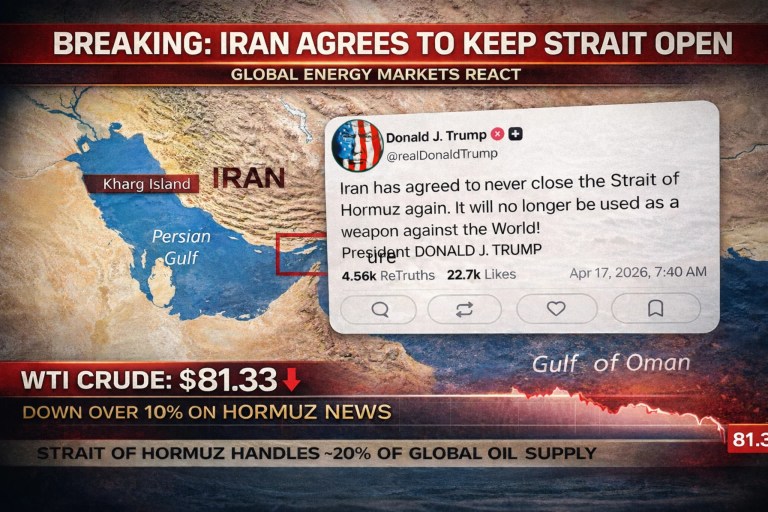
- Global energy price fallout
- Diplomatic shockwaves across NATO, BRICS, and beyond
About the Author

Discover more from SHR Media
Subscribe to get the latest posts sent to your email.