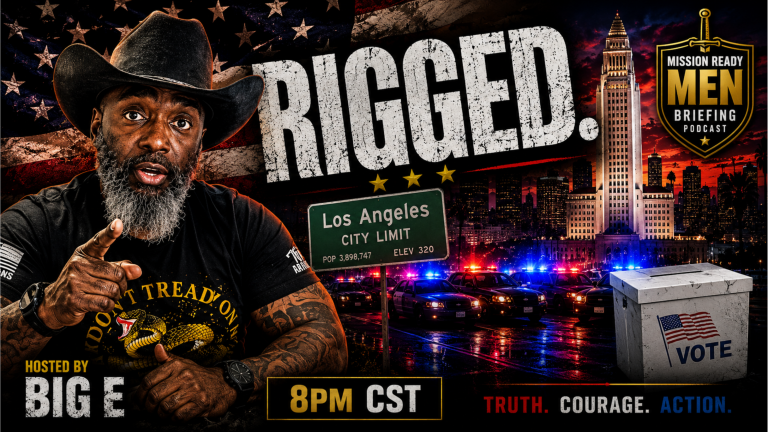
When chaos erupts on American streets, a recurring question surfaces: Can the President of the United States take control of a state’s National Guard without the governor’s consent?
The answer, rooted in Title 10 of the U.S. Code, is yes—under specific conditions. And the last time this power was exercised on a major scale? The 1992 Los Angeles riots.
🔹 What Does “Federalizing the Guard” Mean?
Normally, National Guard units operate under Title 32 status—meaning they are funded by the federal government but commanded by their state governor.
But when federalized under Title 10, these troops are:
- Pulled under federal control
- Placed within the Department of Defense command structure
- Answerable to the President of the United States, not the governor
This shift makes the National Guard functionally part of the active-duty military.
🔹 The Legal Backbone: Title 10 & The Insurrection Act
10 U.S. Code § 12406
Allows the President to call state National Guard units into federal service:
“Whenever the President considers that unlawful obstructions, combinations, or assemblages, or rebellion against the authority of the United States, make it impracticable to enforce the laws…”
Insurrection Act (10 U.S. Code §§ 251–255)
This Act empowers the President to deploy troops—even without a governor’s approval—to:
- Enforce federal law
- Suppress insurrections
- Restore public order
🔥 Case Study: The 1992 Los Angeles Riots
When the Rodney King verdict sparked widespread looting, arson, and violence across Los Angeles in April 1992, California Governor Pete Wilson initially activated the California National Guard under state authority.
But it quickly became clear the state couldn’t contain the unrest. On May 1, 1992, President George H. W. Bush invoked the Insurrection Act and federalized over 3,000 National Guard troops.
At that moment:
- The Guard shifted from state to federal command (Title 32 → Title 10)
- Active-duty military units from the U.S. Army and Marines were also deployed to assist
- Governor Wilson supported the move, but his consent was not legally required
This was the first major use of the Insurrection Act since 1968 and remains the modern precedent for federalized domestic military response.
🛑 Does the Governor Need to Approve?
No. Under Title 10 and the Insurrection Act:
- The President can federalize the Guard without a governor’s permission
- The action must be justified by lawlessness, rebellion, or an inability to enforce federal law
However, in practice, Presidents often consult with governors first to avoid political fallout. But legally, state refusal is not a veto.
🧭 What About Today?
As unrest flares again in cities like Los Angeles, there are increasing questions about whether federalization is on the table.
The precedent from 1992 is clear:
When state authorities falter, the federal government has both the authority and the historical precedent to step in.
Whether or not that happens today depends on both the scale of the chaos—and the political will in Washington.
✅ Bottom Line
| Question | Answer |
|---|---|
| Can the President federalize the National Guard? | Yes, under Title 10 and the Insurrection Act |
| Is the governor’s permission required? | No |
| Has it happened before? | Yes, most notably in 1992 during the LA riots |
| What changes when troops are federalized? | They report to the Pentagon instead of the state governor |
📌 The 1992 riots serve as a blueprint for today’s legal and tactical decisions. If Los Angeles again descends into uncontrollable unrest, the White House has the authority—and the precedent—to act.
Citations:
🔹 Legal and Statutory Sources
U.S. Code. (n.d.). 10 U.S. Code § 12406 – National Guard in federal service: call. Cornell Law School Legal Information Institute. https://www.law.cornell.edu/uscode/text/10/12406
U.S. Code. (n.d.). 10 U.S. Code §§ 251–255 – Insurrection Act. Cornell Law School Legal Information Institute. https://www.law.cornell.edu/uscode/text/10/subtitle-A/part-I/chapter-13
U.S. Code. (n.d.). 18 U.S. Code § 1385 – Use of Army and Air Force as posse comitatus. Cornell Law School Legal Information Institute. https://www.law.cornell.edu/uscode/text/18/1385
🔹 Government and Research Reports
Congressional Research Service. (2006). The use of federal troops for disaster response: Legal issues (CRS Report RL33377). https://crsreports.congress.gov/product/pdf/RL/RL33377
Department of Defense. (2012, December 29). Defense Support of Civil Authorities (DoDD 3025.18). https://www.esd.whs.mil/Portals/54/Documents/DD/issuances/dodd/302518p.pdf
National Guard Bureau. (n.d.). Civil Support: J-34. https://www.nationalguard.mil/Leadership/Joint-Staff/Special-Staff/J-34-Civil-Support/
🔹 Historical Precedents and News Reports
U.S. Army Center of Military History. (2003). The United States Army in Los Angeles, 1992 (CMH Pub 70-117-1). https://history.army.mil/html/books/070/70-117-1/CMH_Pub_70-117-1.pdf
Eisenhower Presidential Library. (n.d.). The Little Rock Crisis. https://www.eisenhowerlibrary.gov/research/online-documents/little-rock-crisis
Schmitt, E. (1992, May 2). Bush sends troops to Los Angeles; rioting eases. The New York Times. https://www.nytimes.com/1992/05/02/us/bush-sends-troops-to-los-angeles-rioting-eases.html
About the Author

Discover more from SHR Media
Subscribe to get the latest posts sent to your email.